Why AI Didn't Make Your Team More Productive
Companies handed everyone AI and expected a step change in output. For most, it didn't come. The tool was never the constraint. The person using it was.


Give someone the Iron Man suit and they do not become Iron Man. They become a person falling out of the sky in an expensive suit.
That is roughly what happened when companies handed their teams AI and waited for output to jump. Some of it got faster. The results mostly did not follow. PwC's 29th Global CEO Survey, published in January 2026, found that 56% of CEOs had seen neither higher revenue nor lower cost from AI in the past year. MIT's Project NANDA studied more than 300 AI deployments in 2025 and found about 5% of integrated pilots producing real value. The money went in. The productivity did not come out.
The usual explanation is that the tools are still early, or people need more training. I think the explanation is simpler and less comfortable. The tool was never the thing holding your team back. The person using it was, and AI does not fix that. It magnifies it.
AI cannot exceed the person driving it
A model does what you ask. The quality of what you get depends almost entirely on the quality of what you brought to it: the judgment to know what is worth making, the taste to tell the good option from the plausible one, the sense of what the market actually wants.
Hand that to a strong person and AI makes them faster at things they were already good at. Hand it to someone who could not tell a good idea from a bad one, and now they produce bad ideas at ten times the speed. The output looks more finished, which is worse, because it takes longer to notice it is empty.
This is why two people with the same tools produce wildly different work. It was never the tools. The AI met each of them where they were and multiplied it. A big thinker got bigger. A small one got a faster way to stay small.
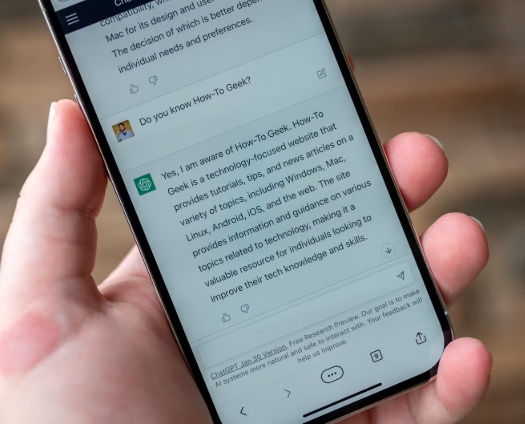
The uncomfortable part is what AI does to the person in the middle. It is built to be agreeable. It flatters, it agrees, it fills in confident-sounding words, and it can leave someone feeling like their thinking grew when all that grew was the word count. The feeling of getting smarter is not the same as getting smarter, and the tool is very good at producing the feeling.
Production stopped being the bottleneck
There is a deeper shift underneath all this. For most of the history of work, producing the thing was the hard part. You hired a designer because designs were hard to make. You hired a developer because code was hard to write. The fact that a design or a working feature came out the other end was proof that work had happened.
That proof is gone. A design comes out now whether or not anyone good was involved. So the value moved off the production and onto the two things AI cannot do for you: deciding what to make, and growing the person who decides.
Companies mostly did not notice the move. They bought AI to speed up production, the part that was already solved, and left the actual constraint untouched. Then they measured tokens and adoption and seats, and wondered why the numbers on the bottom line did not move.
You do not buy a pilot. You grow one.
Here is the part most companies get backwards. They treat their people as fixed and the tools as the variable. Swap in a better tool, get a better result. But the tool is now a commodity. Everyone has the same models. The variable that actually moves is the person, and the person is not something you buy. It is something you grow.
This is the oldest thing in the world and AI did not change it. Superstars are not born and they are not hired fully formed. They are grown, by doing harder work, thinking bigger thoughts, and getting to see their own reasoning develop over time. A company that wants better output has to make its people think bigger. There is no tool that skips that step.
Most companies do the opposite. They evaluate people on output and manage for efficiency, which means they optimize for capturing results and stripping away the messy process that produced them. The thinking gets flattened into a status update. The reasoning disappears into a chat thread. The person stops growing because nobody is looking at how they think, only at what they shipped. Then everyone is surprised when the shipping slows down.
Where the thinking lives
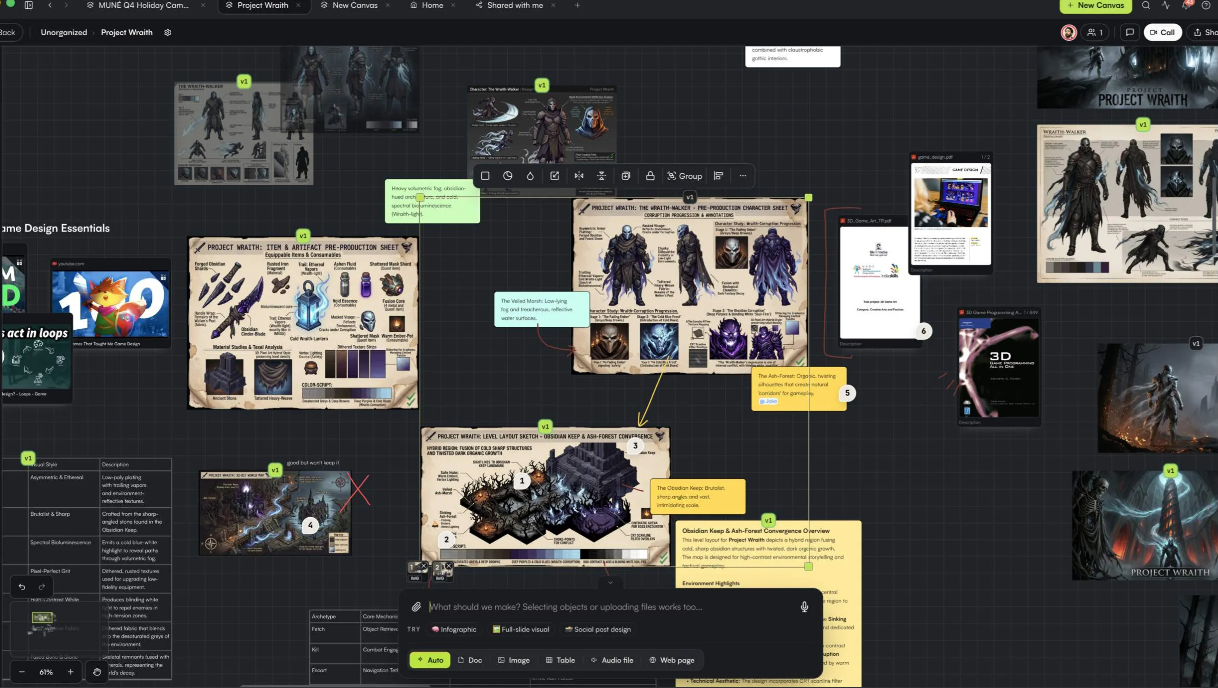
An idea does not arrive finished. It starts small, one rough note. It grows as it runs into research and other people and better versions of itself. Then it narrows, converging toward something you can actually ship. Expansion, then convergence. That is the real shape of good thinking, and you can watch it happen if you have somewhere to watch it.
Most tools cannot hold that shape. Chat is a line, so the thinking scrolls away. A doc holds the conclusion but not the path. A task board holds what to do but not why. The process, the actual place where a person's thinking grows, has nowhere to live, so it evaporates, and all that survives is the result.
We built ALLO to hold the process. A rough note becomes research becomes a first draft becomes a shared page, each step visible on one canvas, next to the ones before it. A half-formed idea in the corner, the kind someone types offhand, can grow into the whole thing. The team can see not just what got made but how the thinking moved, which is the only way anyone learns to think better, by watching good reasoning develop instead of only seeing the polished end of it.
AI will keep getting more capable. The tools will keep leveling. The one thing that will not commoditize is a person who can think, and the companies that win will be the ones that grow those people instead of assuming a subscription will do it for them.
The suit was never the hard part. The pilot is.
FAQ
Why isn't AI improving my team's productivity? Because AI multiplies the person using it rather than replacing their judgment. A strong contributor gets faster; a weak one produces more low-quality work faster. The tool meets people where they are, so results vary widely even when everyone has the same AI.
Why do companies see no ROI from AI? Most bought AI to speed up production, which was already the easy part, and left the real constraint untouched: deciding what is worth making, and growing the people who decide. PwC found 56% of CEOs saw no revenue or cost benefit from AI in the past year.
Does AI make people smarter? It can make people feel more capable without making them more capable, because it is built to be agreeable and fills in confident language. Real growth comes from harder thinking over time, which a tool can support but cannot supply.
How do you actually get value from AI at work? Invest in the person, not just the subscription. Give people work that stretches their thinking, and a place where their reasoning is visible and can develop, rather than measuring only finished output.
What does ALLO do here? ALLO holds the process, not just the result. Ideas, research, drafts, and decisions live together on one canvas, so a team can see how thinking develops and grow from it, instead of losing the reasoning the moment the work ships.