You Cannot Hire Your Way to Good Work
Why hiring senior talent rarely transfers excellence, and how making reasoning visible during the work is what actually develops judgment on a team.


The instinct, when the work is not good enough, is to hire someone better.
It is a reasonable instinct and it works up to a point. Past that point it gets expensive and unreliable, because the people who are genuinely good are scarce, know it, and are not usually available. So companies end up bidding for a small pool and hoping.
The other option is to grow them yourself, which everyone agrees is a nice idea and almost nobody does, because it is slow and there is no obvious mechanism for it. You cannot put judgment in a training deck.
There is research on this, though. It is old, it comes out of education rather than business, and it says something specific enough to act on.
Why craft transmitted and office work does not
In 1989 Allan Collins, John Seely Brown, and Susan Newman published work on what they called cognitive apprenticeship, and the observation underneath it is simple. In traditional apprenticeship, a learner can see the work happening. You watch someone plant a crop, build a cabinet, cut a garment, and you help as you are able. The process is right there in front of you, so you absorb not just the result but the sequence of judgments that produced it.
Then they point out what changed. In schooling, and by extension in most modern knowledge work, the processes of thinking are invisible. As they put it, standard practice renders key aspects of expertise invisible, and too little attention is paid to the reasoning and strategies experts actually use when solving real problems. Their whole model exists to fix that, and the fix is to deliberately bring the thinking to the surface and make it visible.
Now think about what a junior person on your team actually sees.
They see finished deliverables. The completed deck, the shipped page, the approved campaign. They see the output of somebody's judgment and none of the judgment. The decision to kill the first three directions, the reason the safer option was rejected, the meeting where two people disagreed and one of them turned out to be right, all of that happened somewhere they could not see, or in a room they were not in, or in a chat thread that has since scrolled past.
So they learn what good looks like and never learn how it was arrived at. Which means they can copy the surface of good work, and when they hit a situation the surface does not cover, they have nothing.
This is why senior hires disappoint
It also explains a pattern most people have watched at least once. A company hires someone excellent from a company that was doing great work, and the excellence does not transfer.
Part of that is the usual context problem. But part of it is that the thing making the previous company good was never located in one person. It was in how a group of people thought together, and the new hire absorbed it by being inside that process for years. Extract them from it and you get their taste, which is real, and none of the machinery that produced it.
Meanwhile the company they left keeps producing good work, because the machinery is still there.
AI raised the stakes on this
Everyone now has the same models. The difference between two teams with identical tools comes down to who is using them, and AI amplifies whatever is already there rather than supplying anything missing. A person with judgment gets faster at exercising it. A person without it produces more work that looks finished and is not.
Which means the gap between teams is now almost entirely a gap between people, at exactly the moment when most companies have less visibility into their people's thinking than ever, because AI lets everyone produce polished output alone and hand it in.
If a junior designer generates forty options and picks one, and all you ever see is the one, you have no idea whether they chose well or got lucky, and neither do they.
Make the thinking visible on purpose
The practical version of all this is unglamorous. If you want people to get better, they have to be able to see how good work gets made, and other people have to be able to see how they think while they are doing it.
That means the work in progress needs to live somewhere visible rather than in someone's private files. The options that were considered, not just the one that shipped. The reason a direction was killed. The rough note that turned out to be right. The disagreement.
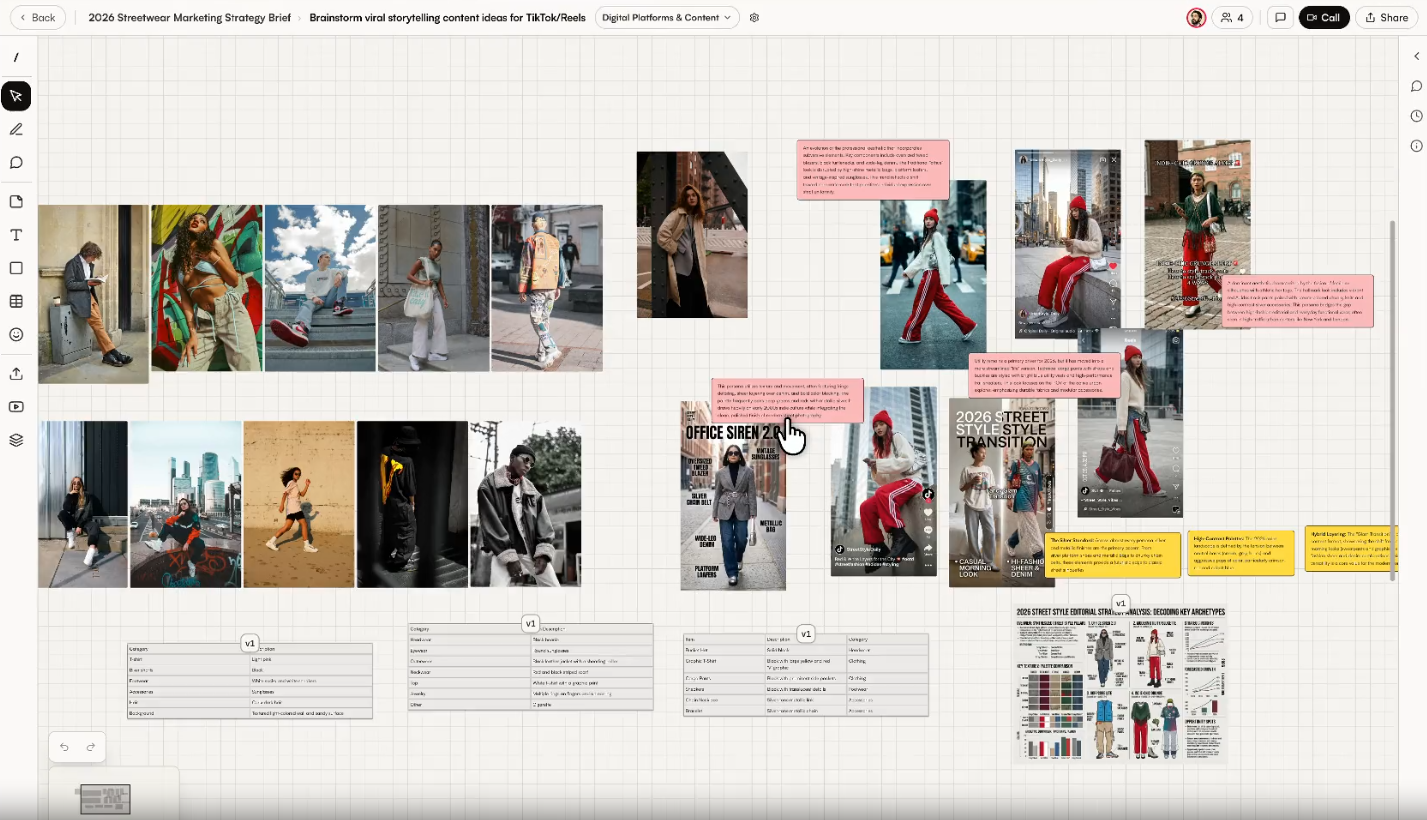
This is what we built ALLO around. A rough idea sits on a canvas next to the research that tested it and the options it grew into. Feedback attaches to the thing it is about. The decision stays next to the work that earned it. Somebody who was not in the room can open it later and follow how the thinking moved, which is the closest thing to an apprenticeship that knowledge work allows.
The immediate benefit is that a team makes better decisions, because everything is in one place where it can be compared. The compounding benefit is that people get better, because for the first time they can watch reasoning happen instead of only seeing what it produced.
Collins and Brown were writing about classrooms in 1989 and the point holds anywhere expertise has to move from one person to another. Nobody ever learned judgment from a finished deliverable.
FAQ
Can you develop taste and judgment in a team, or do you have to hire it? You can develop it, but not through training material. Research on cognitive apprenticeship, from Collins, Brown, and Newman in 1989, found that expertise transfers when the expert's reasoning is made visible, which is why craft skills passed down easily and knowledge work does not.
Why do senior hires often underperform expectations? Because much of what made their previous team good lived in how that group thought together, not in one person. Their judgment transfers. The process that produced it does not.
Why does this matter more with AI? AI amplifies the ability a person already has. Everyone has the same models, so the difference between teams is now mostly a difference between people, at the same time as AI makes it easier to produce polished work alone with the reasoning hidden.
How do you make thinking visible at work? Keep work in progress somewhere the team can see it: the options considered, the reasons a direction was rejected, the feedback, and the decision, all attached to the work rather than summarized after the fact.
What does ALLO do here? ALLO holds the process on a shared canvas, so ideas, research, options, feedback, and decisions stay together and visible, and people can learn from how work actually came together.