Getting Organized Is What Slowed Your Team Down
Why scaling structures that only record finished output quietly erase the half-formed thinking that produced a team's best work, and how to keep it visible.


In 2017 Gary Hamel and Michele Zanini surveyed roughly 7,000 Harvard Business Review readers about bureaucracy and found that people were losing about a day a week to what they called feeding the machine, meaning the reporting and compliance work that produces nothing by itself. At companies over a thousand people, 96% said it was not easy or was very difficult for a front-line employee to start something new. Bain's research on founder's mentality describes the same slide from another angle. Complexity accumulates, decision rights blur, and choices one person used to make get escalated until the company cannot respond to anything quickly.
None of that is surprising. Bureaucracy is slow, everybody knows it, and companies still install it because at some size they have to.
What interests me is narrower. Something specific disappears when a company gets organized, and it is not speed.
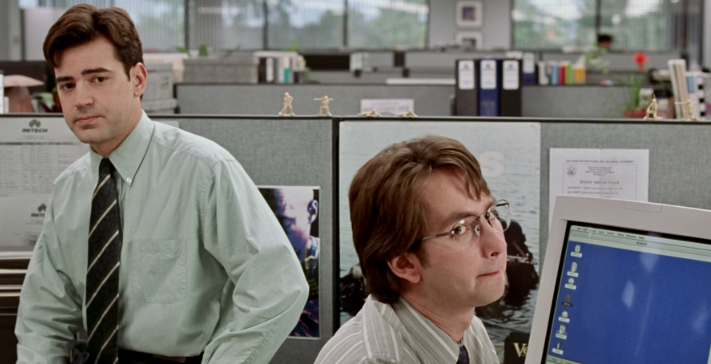
The system you install is built to capture outputs
Think about what actually gets set up during the scaling push. Weekly status reports. Clear ownership. Documented decisions. A tidy record of what shipped, when, and by whom.
Every piece of it exists to make work legible to the people running the company, which is a real need. But legible means summarized, and summarizing means throwing away the part that will not fit in a report.
What will not fit is the process. The rough idea somebody had on a Tuesday. The research that killed it and the second version that came out of the wreckage. The four directions that were on the table and the argument about which one to keep. The comment somebody made in passing that turned out to be the whole answer. A status report has no field for any of that, so it goes nowhere, and within a quarter the company's entire record of itself consists of conclusions with no reasoning attached.
The unfinished thought is the raw material
Margaret Heffernan, drawing on collaboration research from Alex Pentland and Tom Malone at MIT, describes how good ideas actually form. Innovation is not a eureka moment. It usually starts with a poor or half-baked idea, and then through other people's contributions, reflection, and iteration it turns into a good idea and occasionally a breakthrough. The organizations where this works keep a climate where it is safe to ask the stupid question or float the unfinished thought.
Now hold that next to the newly organized company. Only finished work is visible there. People report outcomes rather than thinking. The half-baked idea has nowhere to go, no format to go in, and no upside for the person who has it, since being seen with unfinished work is now a small professional risk rather than a normal part of the job.
So people stop sharing at the stage where sharing was doing the work. They wait until an idea is defensible, which means they develop it alone, which means it gets the benefit of one brain instead of six. The company still runs. It just quietly loses the mechanism that made its early work good, and the loss shows up months later as a vague sense that the team has gotten less interesting.
You cannot systematize the part that mattered
Underneath the whole exercise is a belief that past success can be copied forward. The team did well, so capture the method, write it down, apply it at scale.
You can capture the steps. You cannot capture the judgment that picked those steps, or the taste that threw out the safer option, or somebody's willingness to chase a vague idea for two days on the chance that it goes somewhere. Those do not survive being written into a procedure. What scales is the shell, and a shell produces shell-shaped work.
This is the tension worth sitting with if you run a growing company. Management efficiency and the capacity to make good things are separate goals, and they trade against each other more than anyone admits. Structure eventually becomes necessary. The failure is installing so much of it that thinking has nowhere left to happen in public.
Keep the process somewhere people can see it
The answer is not to stay messy. It is to make sure that at least one place in the company holds the work in progress, not only the summary of it.
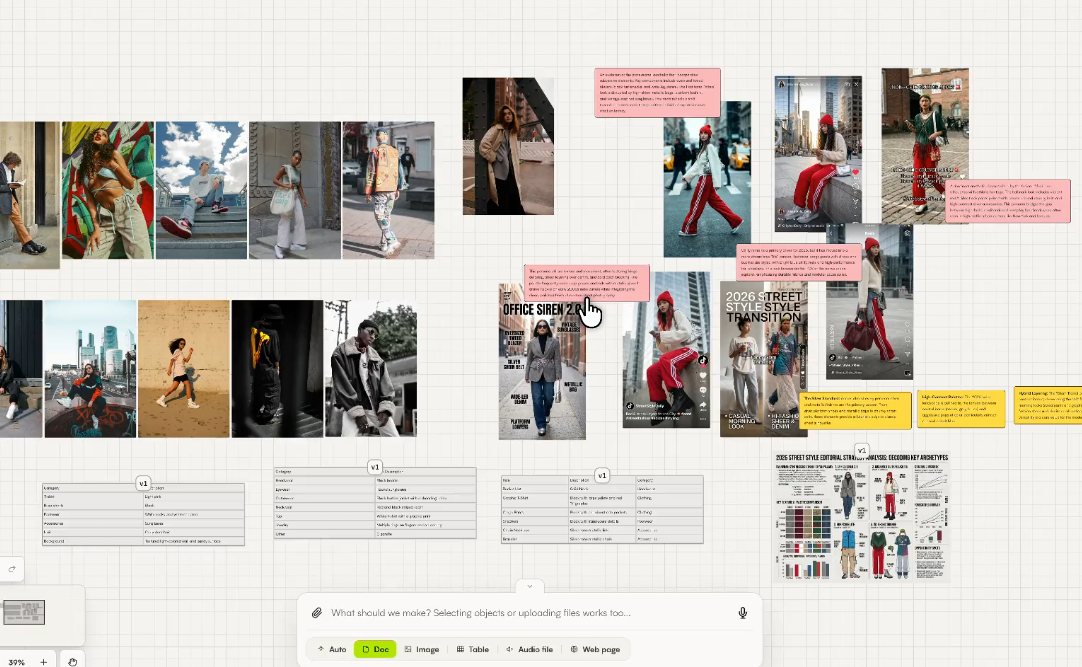
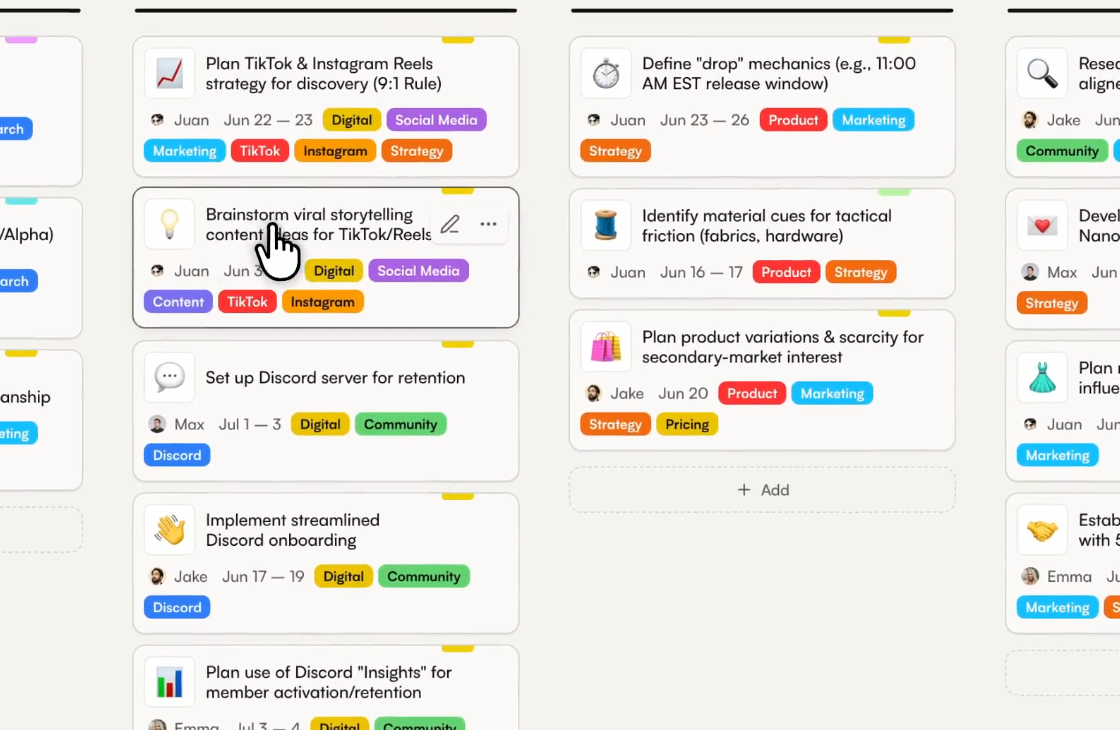
That is what we built ALLO to be. A rough note sits on the canvas next to the research that tested it. The options are laid out side by side, so anyone can see what was considered instead of taking someone's word for what was rejected. Feedback attaches to the thing it is about. The decision stays next to the work that earned it. An offhand comment in the corner can grow into the thing that ships, and the path it took is still there afterward.
The immediate benefit is that a leader can see how work is being made rather than waiting for a report about it. The longer benefit matters more. Somebody who joins next year can look at how a good piece of work actually came together, which is the only way people learn to do it, since nobody ever learned judgment from reading a finished deliverable.
FAQ
Why do companies slow down as they grow? Coordination and reporting overhead accumulates. Hamel and Zanini's 2017 HBR survey of about 7,000 respondents found roughly a day a week lost to internal machine-feeding, and 96% of people at companies over a thousand employees said starting something new was not easy or very difficult.
Is process bad for a growing company? No. Structure becomes necessary at scale. The damage comes from systems that only capture finished output, which leaves the thinking behind the work with nowhere to live.
Why does unfinished thinking matter? MIT collaboration research, described by Margaret Heffernan, finds that good ideas usually begin as poor or half-baked ones and improve through other people's input. A company with no place for unfinished work loses the raw material of its best output.
How do you scale without losing what made the team good? Keep one place where work in progress stays visible to the team, with options, reasoning, and decisions attached to the work rather than compressed into a status update.
What does ALLO do here? ALLO holds work in progress on a shared canvas, so ideas, research, options, feedback, and decisions stay together and visible as a company grows.